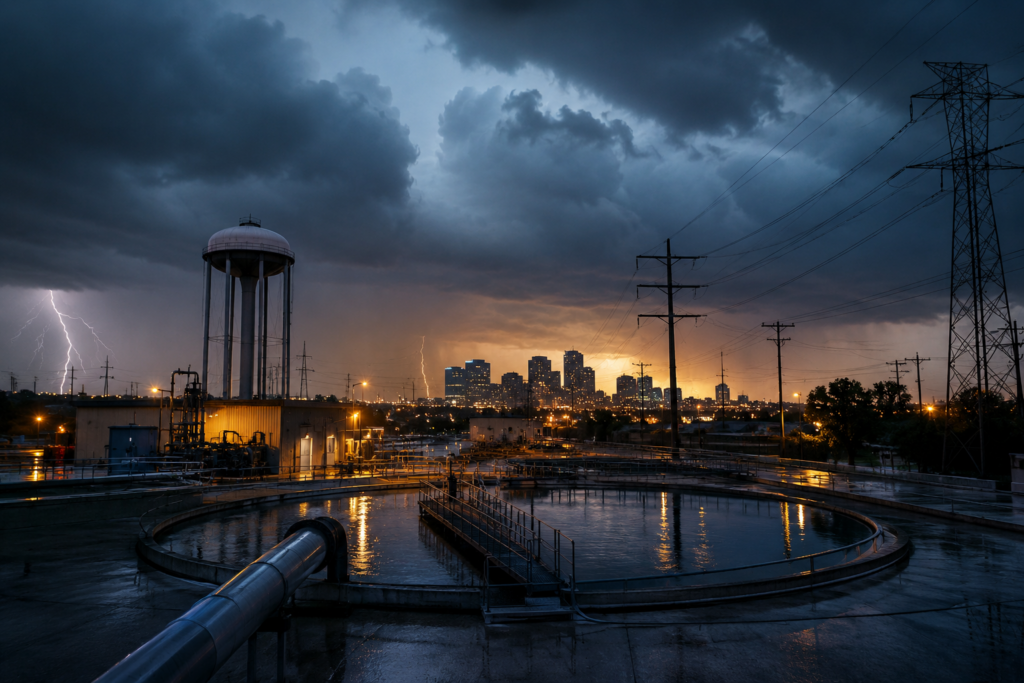
Power outages are often viewed as an inconvenience—but for water systems serving growing communities, they can quickly escalate into public health emergencies. For Municipal Utility Districts (MUDs), city operators and critical facilities heads, maintaining power is directly tied to maintaining safe, reliable water service—and managing risk before disruptions occur.
When Power Fails, Water Systems Follow
Water and wastewater infrastructure depends on continuous power to:
- Pump water through distribution systems
- Maintain pressure across service areas
- Operate treatment and monitoring systems
When power is lost:
- Pressure in the system drops
- Contamination risk increases
- Utilities are required to issue boil-water notices
These are not isolated events—they are routine consequences of grid disruption across Texas systems and highlight the importance of proactive risk management in critical infrastructure planning.
Why Boil-Water Notices Matter
From an operational standpoint, a boil-water notice signals more than a temporary inconvenience. It reflects a breakdown in system continuity with real implications:
- Public health risk, especially for vulnerable populations
- Regulatory exposure for utilities
- Loss of public confidence in local infrastructure
For MUD boards, operators and city officials, these events often become the moment when residents recognize the dependency between energy and water—and the cost of unmanaged risk.
The Root Cause Is Not Water—It’s Power
Most boil-water events are not caused by failures in water infrastructure alone. They are triggered by upstream power disruption.
Your internal positioning already captures this clearly:
- Pump stations lose power
- Treatment systems shut down
- Entire distribution networks become compromised
In other words, water reliability is energy reliability—and energy reliability is a core component of risk management for essential services.
A Shift in How Communities Think About Risk
Historically, utilities planned around:
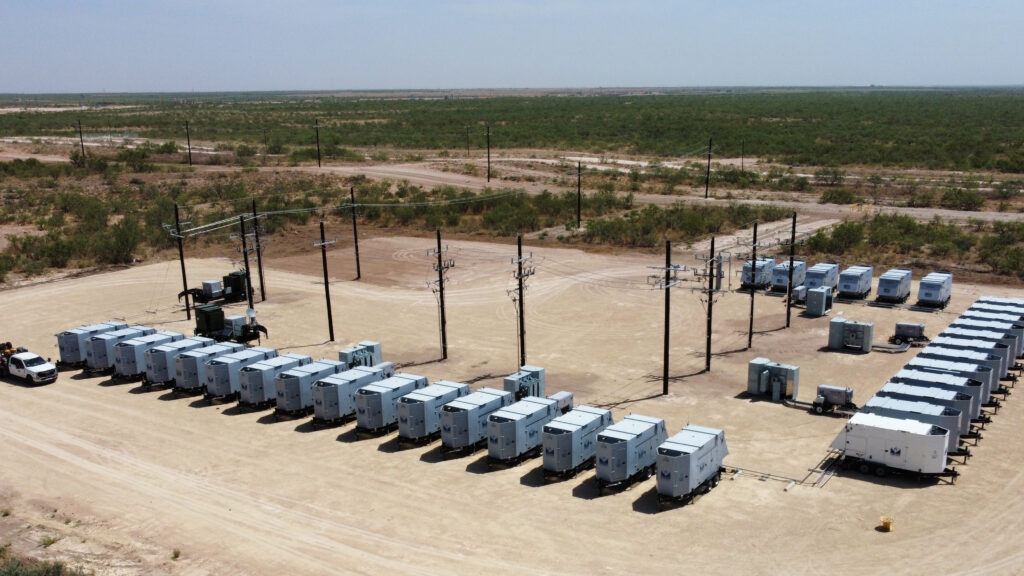
- Emergency generators
- Mobile backup equipment
- Post-event recovery
But these approaches:
- Are slow to deploy during large-scale events
- Protect only individual facilities, not systems
- Depend on logistics that often fail during storms
As a result, communities are shifting toward a more proactive approach—managing risk before events occur rather than reacting after systems fail.
What MUDs and Cities Can Do Now
Without making assumptions about specific solutions, there are practical steps every critical facility can take to better manage risk and improve continuity:
- Map critical water infrastructure
o Identify pump stations, treatment plants, and control points - Understand power dependency
o Which assets lose function immediately without electricity? - Evaluate continuity requirements
o How long must systems operate during an outage? - Align leadership-level priorities
o Treat energy reliability as part of overall risk management and water system planning
Closing Thought
Water outages are rarely just water problems. They are system-wide failures driven by power loss.
For MUD directors, city leaders and hospitals, the opportunity is to move from reacting to outages… to managing risk and planning for continuity before they happen.